
SIPs can give better returns in a volatile market because they gather more units over time, says Arnav Pandya.

One can equate SIPs to the recurring deposit.

rediffGURU Vivek Lala answers your income tax and personal finance queries.
The law of demand clearly states that at higher prices demand is less and vice versa. The retail investor investing in the stock market doesn't quite follow that logic.

Ask rediffGURU and PF expert Nitin Narkhede your mutual fund and personal finance-related questions.

'The biggest near-term risk to Indian equities is the outflow of investments to China as tactical trades by foreign investors.'
Which are the best systematic investment plans for saving tax? Which are the best mutual funds to buy now? How should you plan your taxes and dervive optimum returns from them? Should you buy a house, go for a loan in the current economic situation?

Mutual funds recorded Rs 7,600 crore net inflows into active equity schemes in July even as redemptions surged to a 30-month high of Rs 30,400 crore owing to profit booking, reveals data from the Association of Mutual Funds in India (Amfi). Equity net inflows were 13 per cent lower compared to the preceding month's tally. The inflows were supported by a strong flow from retail investors through the systematic investment plan (SIP) route.

Ask rediffGURU and PF and MF expert Janak Patel your mutual fund and personal finance-related questions.
Are you a first time investor? Do you have low risk taking capacity? If yes, then mutual fund SIPs are the best option for you believes mutual fund expert T Srikanth Bhagavat.
A series that will help you clarify financial jargon and empower you to make your own financial decisions.
You have to apply for a recurring deposit account and ask the bank to deduct the stipulated amount from your savings or current account every month.
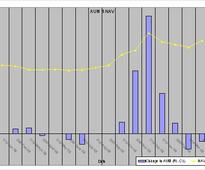
When the NAV falls, you are going to get more units of the fund. That means when the market turns around, you will get much more returns
A Daily SIP collects a small sum from an individual on a daily basis and invests it in the market. It operates like any mutual fund, where the disbursement and handling of the money is the fund manager's prerogative.

Inflow in equity mutual funds halved to Rs 3,240 crore in May, declining for the second consecutive month, primarily due to profit booking by investors amid rising market. However, this was also the 27th consecutive month of inflow in the equity class, which was primarily driven by fund infusion in small-cap and mid-cap categories, data released by the Association of Mutual Funds in India (Amfi) showed on Friday. Overall, the 42-player mutual fund industry continues to see inflow and attracted Rs 57,420 crore, on contributions from debt-oriented schemes.

Mutual funds (MFs) are lining up distinguished new fund offerings (NFOs) for the next financial year to win over investors after a lukewarm response to product launches in the 2022-23 financial year (FY23). NFOs drew a lukewarm response in FY23 as launches were mostly in the passive debt space, which has a comparatively lower popularity among retail investors. The limited launches in equity space also failed to rake in huge sums due to subdued investor sentiments in a volatile market.

The mutual fund (MF) gross inflows through the systematic investment plan (SIP) route topped the Rs 20,000 crore mark for the first time in a calendar month as investors opened a record 6.4 million SIP accounts despite a spike in market volatility. The number of accounts opened last month was almost 50 per cent higher than the registrations seen in March. "India's MF industry has reached yet another milestone with the SIP book crossing above Rs 20,000 crore in April 2024.

From connectivity woes to infrastructure advancements and the startup boom, there is a gulf between claims and reality in India's economic landscape, points out Devangshu Datta.

Diamond prices vary purely on demand and supply. You can make extraordinary returns within six months or it can even take years.
SIPs need to be promoted by the investment agent/distributor community after explaining all the merits and demerits to the investor so as to enable him to take an informed decision.

The Pay Commission's award will provide a windfall that can be used to both spend and invest wisely.

For building long-term wealth, financial planners always advise that the systematic investment plans (SIPs) in equity funds is the best way.

'Investors should plan and make investments strictly on the basis of their risk profile.' 'They should not bite more than they can chew.'
In this article, we list the wrong reasons for investing through SIPs and cite instances when SIPs may not deliver.
UTI, SBI, Reliance MF promote SIPs with low threshold. However, there are several hurdles. Mutual fund investments require the investor to have a PAN -- a big deterrent when it comes to tapping small and marginal investors. A big fear is that given the fickle nature of the stock market, rural investors might easily get scared when there is a downturn in the market.
Consider investing a portion of your assets in tax-saving funds to accumulate wealth over the long-term.

Singapore government's sovereign wealth fund Temasek is looking to invest $10 billion in India during the next three years, Ravi Lambah, Temasek's head of India and strategic initiatives, said.
Banks and mutual funds are devising novel methods to grab your deposits.

What should investors do when markets hit an all-time high, and we have seen five new all-time highs in 2023? Dwaipayan Bose has some answers.
Mutual fund expert T srikanth Bhagavat told Get Ahead readers about what to do with their SIP investments in mutual funds, now that the stock markets are once again at their peak.
Systematic investment plans (SIPs) from mutual funds have become very popular these days. But there are certain things that investors should keep in mind when starting an SIP.

When looking at fund returns, avoid looking at just the past 12 months' performance, says Sanjay Kumar Singh
Neha Kapoor, 22, wants to buy a laptop and save for the future. Financial planning expert Gaurav Mashruwala tells her how she can achieve both goals.
